
Wednesday, September 29, 2010
Map of sustainable farms and communities in South America
Ver Sustainable Farms and Communities in South America en un mapa más grande
I am slightly obsessed and disorganized so to solve these two problems I have made a map of all the sustainable related projects and communities I have been to or researched.

Saturday, September 25, 2010
Varsana
Varsana


 Natural bamboo construction.


 While there I participated in a sweat lodge ritual by jumping in this freezing cold river then into a pitch black sauna several times.
The ritual of sweat lodges began in the 1600's by native American Indians. They believed it cleanses the body of infection, illness and toxins as well as ridding the mind and spirit of negative energy and evil spirits.
I also drank from this river it has pure water bubbling up from and underground spring. For some reason this was such a big deal to me, it was the first time I felt safe drinking straight from a river which is a wonderful feeling. The sweat lodge
 Varsana is an amazing ecological retreat, with yoga, sustainable gardens, building and art. It is run by the Hare Krishna who in my experience were very welcoming but not pushy about their religion at all. They mainly wanted to share respect for nature and man through yoga, meditation, vegetarian diet, sustainable building and agriculture.


 Natural bamboo construction.


 While there I participated in a sweat lodge ritual by jumping in this freezing cold river then into a pitch black sauna several times.
The ritual of sweat lodges began in the 1600's by native American Indians. They believed it cleanses the body of infection, illness and toxins as well as ridding the mind and spirit of negative energy and evil spirits.
I also drank from this river it has pure water bubbling up from and underground spring. For some reason this was such a big deal to me, it was the first time I felt safe drinking straight from a river which is a wonderful feeling.
 The sweat lodgeVarsana is an amazing ecological retreat, with yoga, sustainable gardens, building and art. It is run by the Hare Krishna who in my experience were very welcoming but not pushy about their religion at all. They mainly wanted to share respect for nature and man through yoga, meditation, vegetarian diet, sustainable building and agriculture.
Wednesday, September 22, 2010
More farms in Tenjo, Bogota, Colombia
4 Vientos
 Constanca owns this certified organic farm for 5 years and
practiced on another for 15 years. She is an expert at water flow and her garden patches are built in rows on small mounds where all the excess water flows between perfectly design to drain excess into the river. She uses only this rain water over and over no other water.

 Cut your grass an leave it to provide nutrient back to the earth.
 She is an expert at water flow and her garden patches are built in rows on small mounds where all the excess water flows between perfectly design to drain excess into the river. She uses only this rain water over and over no other water.

 Cut your grass an leave it to provide nutrient back to the earth.
Gabeno
A woofing organic farm with horses, cows, donkey, and chickens.

 Natalia's little house in Tenjo where she will start a garden and harvest bee honey from a hive she moved from her house safely to outside.
Natalia was nice enough to show me around these farms where she gathers vegetables and hand delivers them the same day to people in Bogota through her business Pura Vida Green Store.
She is a symbol of Colombia's rich natural resources and organic produce, However I noticed a lot of people were having trouble finding where to get organic produce in the cit. Her Business helps to support local organic agriculture and preserve Colombia's roots that she feels are becoming lost in new generations.
Sunday, September 19, 2010
Organizmo
Organizmo is a beautiful sustainable finca (farm), retreat and education center owned by Ana Maria Gutierrez and Itamar Sela in Tenjo, Colombia. Ana studied architecture and Itamar horticulture and landscape design, his business is TERRENODiseño. They are a perfect compliment to each other in creating this eco–finca.
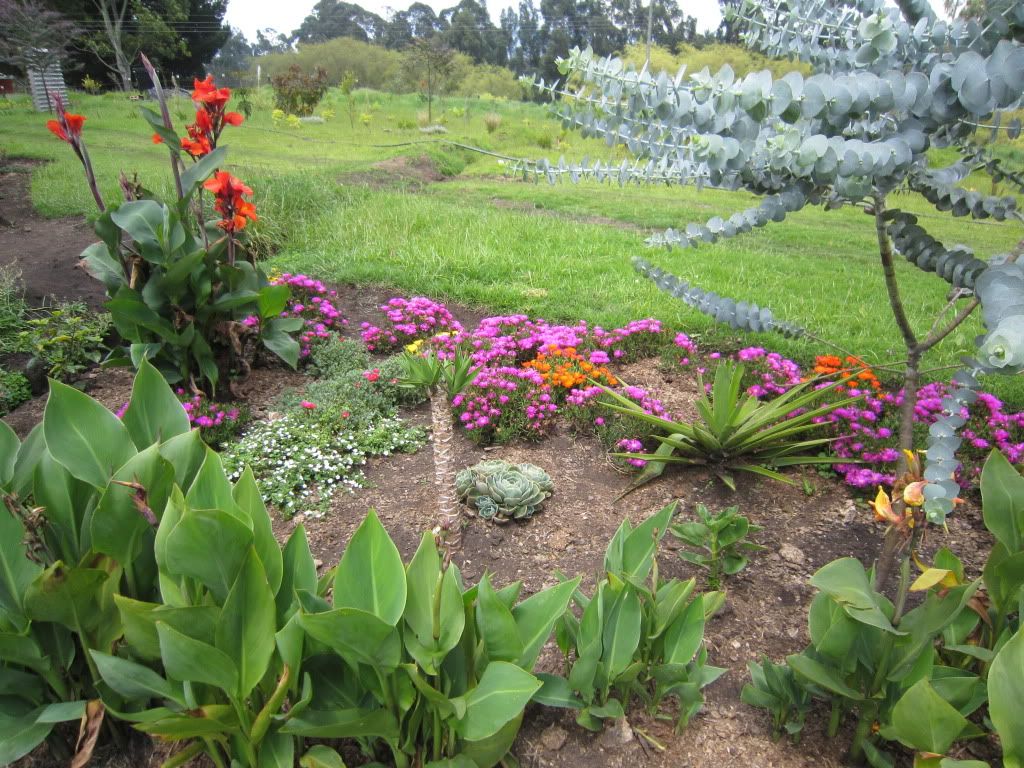
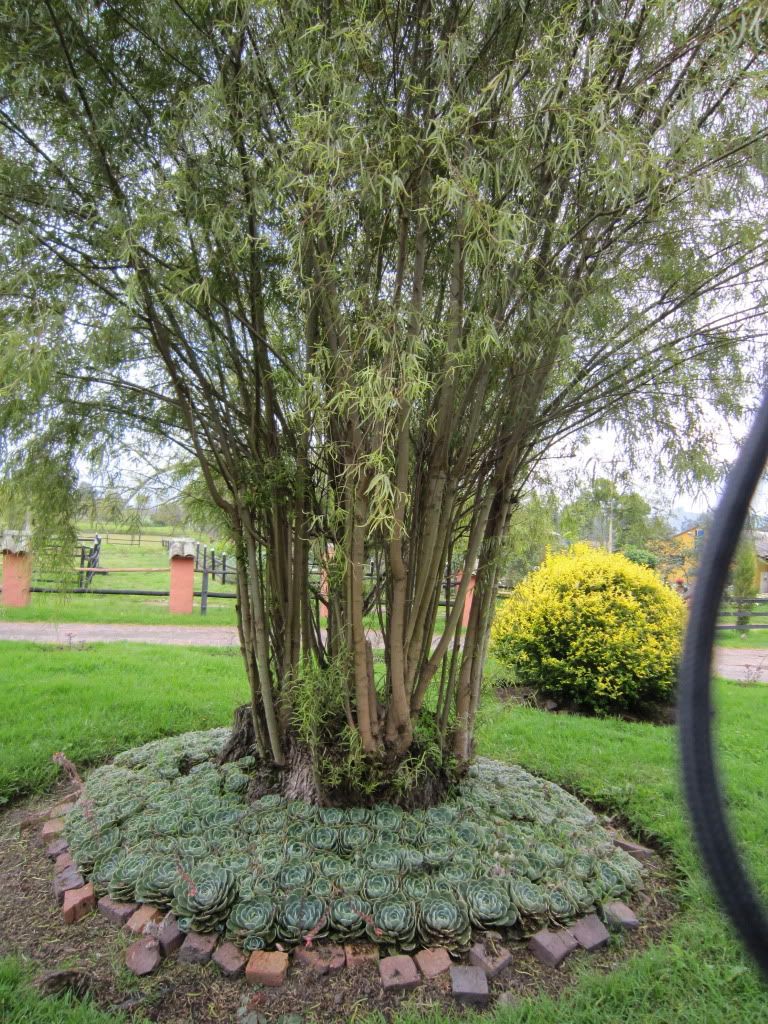
Together they live in a 200–year–old house made of Tapia (condensed earth). They have fertile land that they have adorned with amazing landscaping, a couple Vivero's ( greenhouses), green walls, corn, sheep, goats (for delicious goat cheese), and a few examples of sustainable building using different techniques they teach in workshops. Below is pictures from Organizmo and some of what they have accomplished in only 2 years.
The front yard.
 A viviero
 Itamar's glass terrarium creation
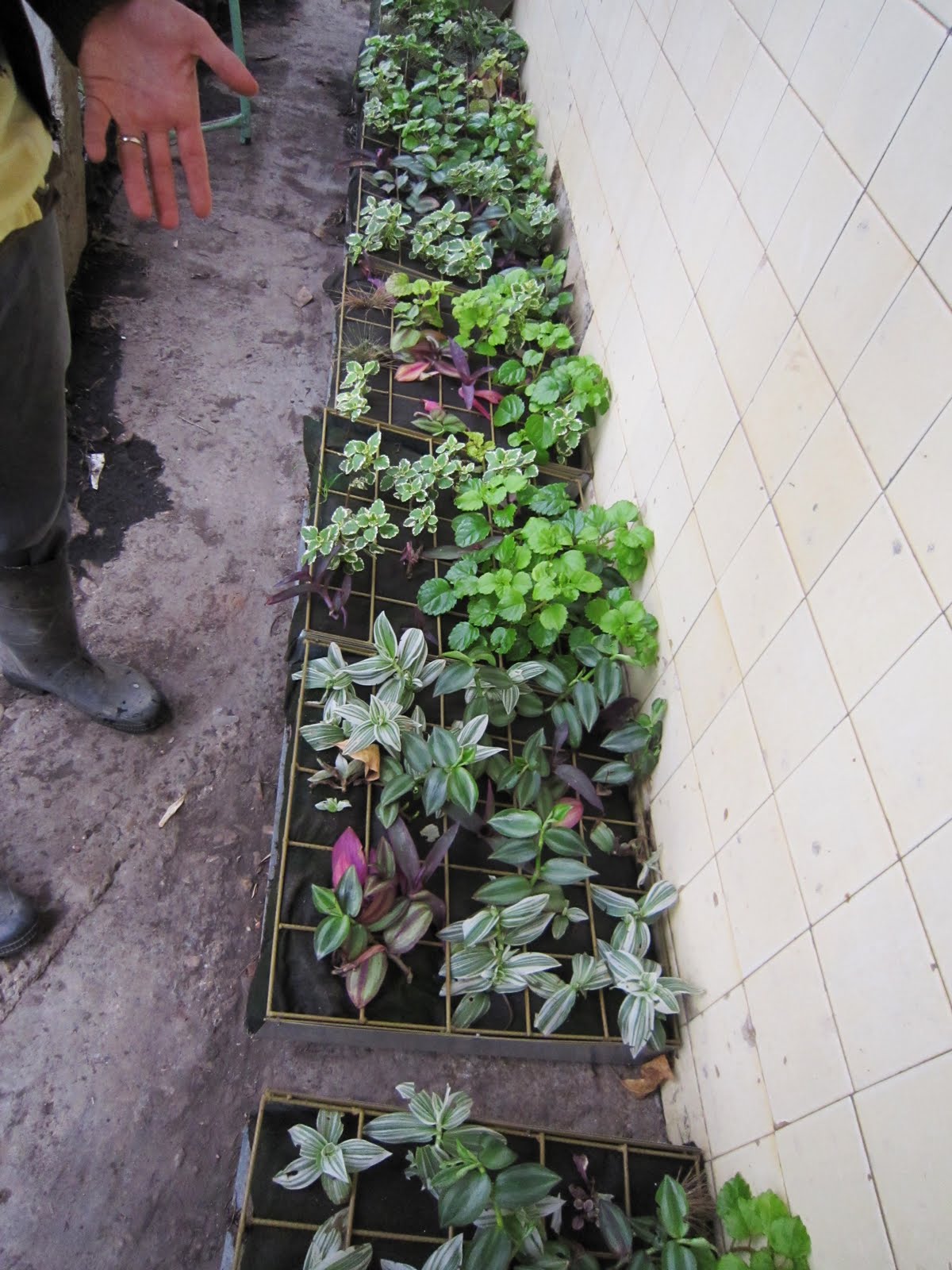
 An easy instant Green wall made of prefab pouches
 More green walls waiting to be hung
 This used to be an old cow milking barn converted to a lovely vivero with many succulents.
 Movable mini greenhouses over rows of plants Itamar is growing for landscaping at an airport.
When it rains they move each on to the side and cover when the sun comes out again. A green wall made by cementing these bricks at an angle. Their are drain holes in theback of each one. They made one for a Crepes & Waffles restaurant in Bogota.
 A bottle house made for a workshop with Andreas Froese, the method is called ECO–TECH
 .
. Bottle house more about this project
 Itamar and Ana show us the interior. Ana was flying to LA this afternoon to take a course at Cal–Earth to build and eco–dome out of superadobe and add on to this structure in a future workshop.
 For the eco–tech technique bottles are stuffed with sand making them
  Below is another Straw Bale course they gave with the architect Gernot Minke.
It has 13% slope which they found is best for green roofs. Inside was a technique to make a wall I had never seen before using orthopedic bandages filled with adobe and steel rods every foot or so.
 The strawbale house also uses manure and several layers of plaster. The outside is colored with natural minerals.
 The back yard near the local river Ana plans to clean when they get permission
 Ana and Itamar invited us for lunch to wait out the rain that had come overhead.
And oh my goodness their homemade goat cheese was sooo good.
 A green wall made by cementing these bricks at an angle. Their are drain holes in theback of each one. They made one for a Crepes & Waffles restaurant in Bogota.
 A bottle house made for a workshop with Andreas Froese, the method is called ECO–TECH.
 Bottle house more about this project
 Itamar and Ana show us the interior. Ana was flying to LA this afternoon to take a course at Cal–Earth to build and eco–dome out of superadobe and add on to this structure in a future workshop.
 For the eco–tech technique bottles are stuffed with sand making them
 - Low cost
- Absorbs shock loads
- Bio climatic
- Can be re used
- Easy to make
- Less construction material
 Below is another Straw Bale course they gave with the architect Gernot Minke.
It has 13% slope which they found is best for green roofs.
 Inside was a technique to make a wall I had never seen before using orthopedic bandages filled with adobe and steel rods every foot or so.
 The strawbale house also uses manure and several layers of plaster. The outside is colored with natural minerals.
 The back yard near the local river Ana plans to clean when they get permission
 Ana and Itamar invited us for lunch to wait out the rain that had come overhead.
And oh my goodness their homemade goat cheese was sooo good.
 Bye friends hope to see you soon.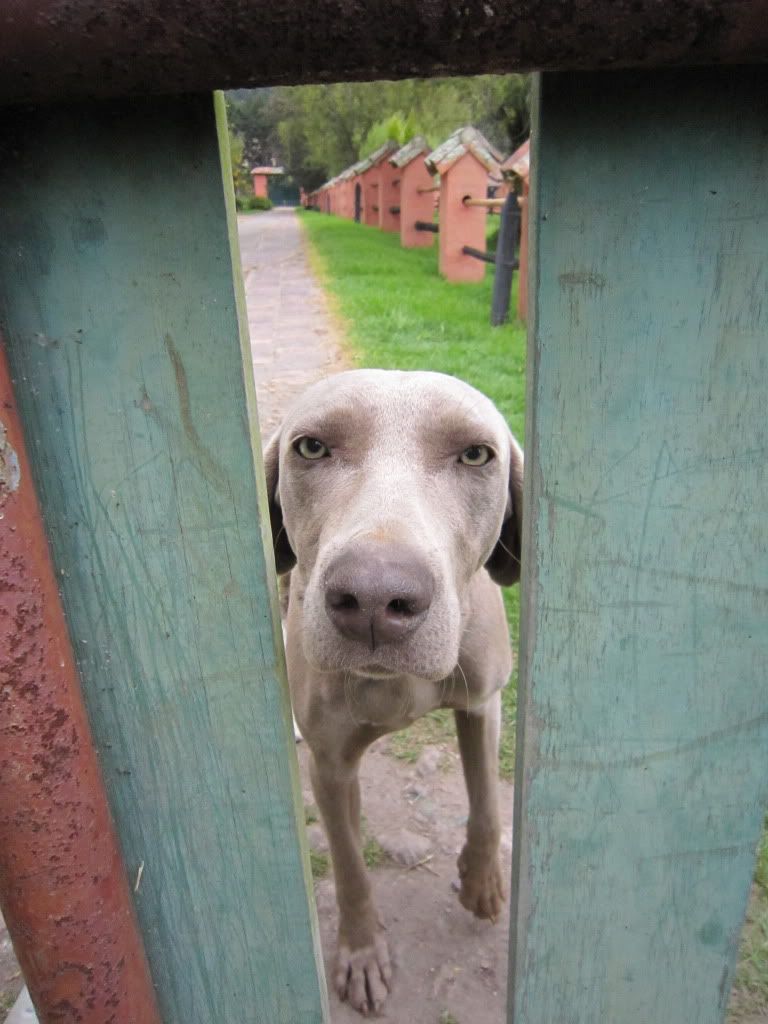
Ana y Itamar also recommend visiting
In BrazilTIBA built by author of Barefoot architects, Lucio Ventanilla
Integria where they met Gernot Minke.
Argentina
Gaia cob house and alternative energies
Colombia more sustainable communities
http://www.ecoaldeasdecolombia.org/
by Ana


Monday, August 23, 2010
Simple Life
 This painting I did from a photo my dad took while traveling in Africa. A small, poor village with bright colors and happy people. It is interesting how we romanticize those lives different from our own. Perhaps we all could use a little more simplicity and color in our world.
I am leaving soon to Colombia to start my own travels. Perhaps to search for a simpler more colorful life myself. Hopefully some new painting will emerge from the beautiful people I meet.
It was accepted into the SD County Fair and it received a People's Choice Award. Yay.
Sunday, July 18, 2010
Arcosanti
Arco by night

 lighting show photos by Kim
Arco by day


.jpg)

Arcosanti is an amazingly diverse and fascinating place to live with many artists and architects making it an ideal place for me to stay and learn about sustainable living while taking time to get creative with my art and crafts.
My first visit to Arcosanti was Sept 3rd, 6months before I knew I would have an internship here for 5 months working with the construction and agriculture department. Arcosanti is a testing ground to develop more self-reliant and sustainable cities that are condensed to preserve land, use renewable energy, and localized agriculture. Conceived by Italian architect Paolo Soleri, Arcosanti is a proposed vision for a better city born 40 years ago.
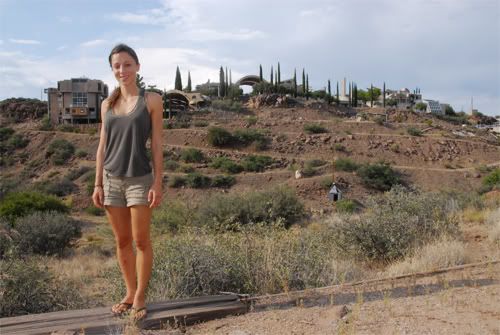 Arcosanti is a testing ground to develop more self-reliant and sustainable cities that are condensed to preserve land, use renewable energy, and localized agriculture. Conceived by Italian architect Paolo Soleri, Arcosanti is a proposed vision for a better city born 40 years ago.
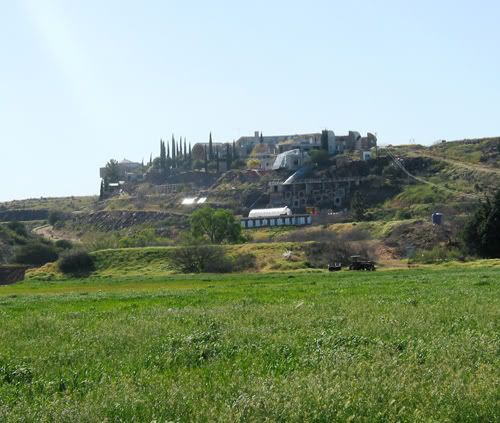 Located an hour north of Phoenix, Arcosanti sits on 4,000 acres of natural preserve with beautiful landscape, frequent lighting shows and stargazing from atop the buildings.
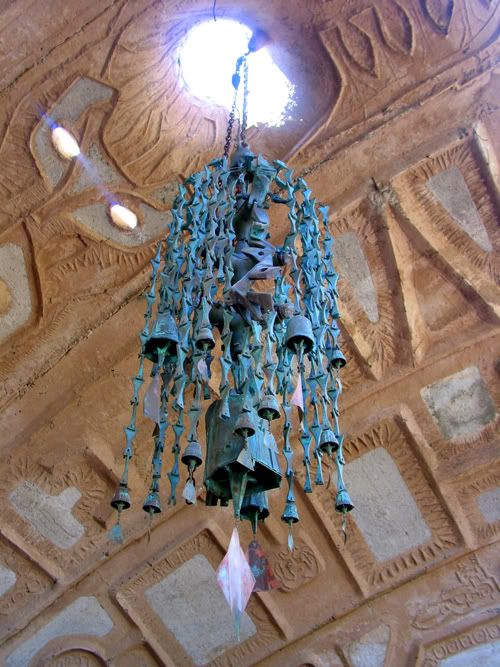
Arcosanti is famous for their bronze and ceramic bells that are sold worldwide and help to fund the project.
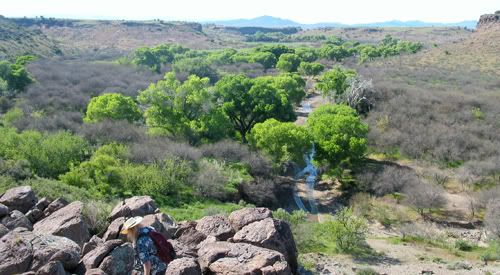
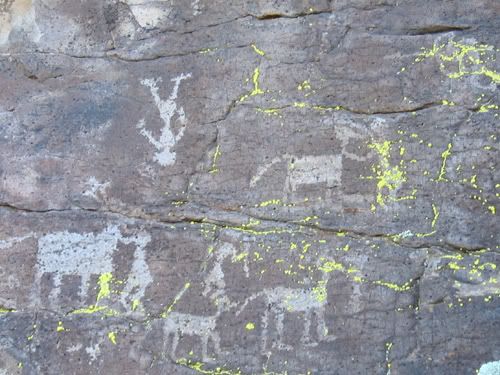
Here is a view of the Agua Fria River from a few miles away The surrounding area is rich in Native American history and artifacts. Below are some petroglyphs of The Indians and perhaps pronghorn or tethered goats. Not sure why that dude is upside down?
 A white peacock that lives down in camp checks me out as I feed the chickens and gather eggs.
 The surrounding area is rich in Native American history and artifacts. Below are some petroglyphs of The Indians and perhaps pronghorn or tethered goats. Not sure why that dude is upside down?
 A white peacock that lives down in camp checks me out as I feed the chickens and gather eggs.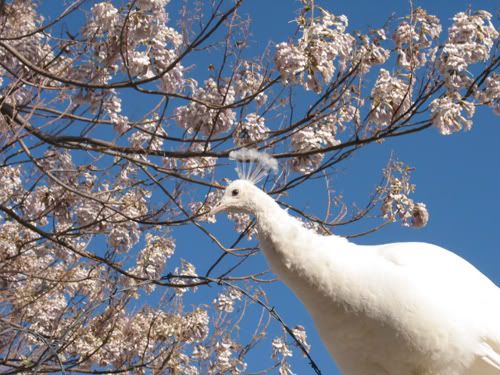
The Greenhouse
I spent most of my time here working on Phase I of the Energy Apron/ greenhouse project. I worked under the construction department and helped to tend this greenhouse and harvest and organize a CSA to sell the produce to residents. I also carefully documented harvest pounds, temperature, water usage, natural pest control and compiled a report assessing our success as compared to various studies in natural and organic farming such as John Jeavons and New Alchemy. We did pretty darn good outproducing New Alchemy and matching John Jeavons (who claims you can grow enough food for a person for a year (300lbs) on 100sq ft.)
Our pretty greenhouse lots of tomatoes, basil, Dill and red leaf lettuce!
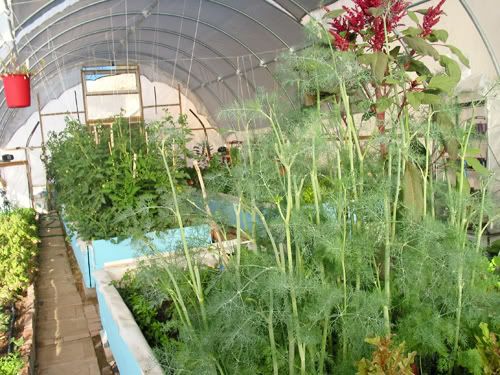 Squash and watermelon grew up these neat upcycled bicycle wheel racks
The goal of the Energy Apron/Greenhouse project is to eventually have 5-7 acres of greenhouse that will provide food year-round for the city and trap heat. This heat will be siphoned through heat duct tunnels that already exist under the building and help heat it during winter months. Nothing like this has been done on such a large scale and if it is successful will be a great experiment in energy usage for large buildings.
I hope to take all I have learned here in sustainable building and agriculture and add to this knowledge in my next journey to South America looking for more sustainable communities.
Subscribe to:
Posts (Atom)